
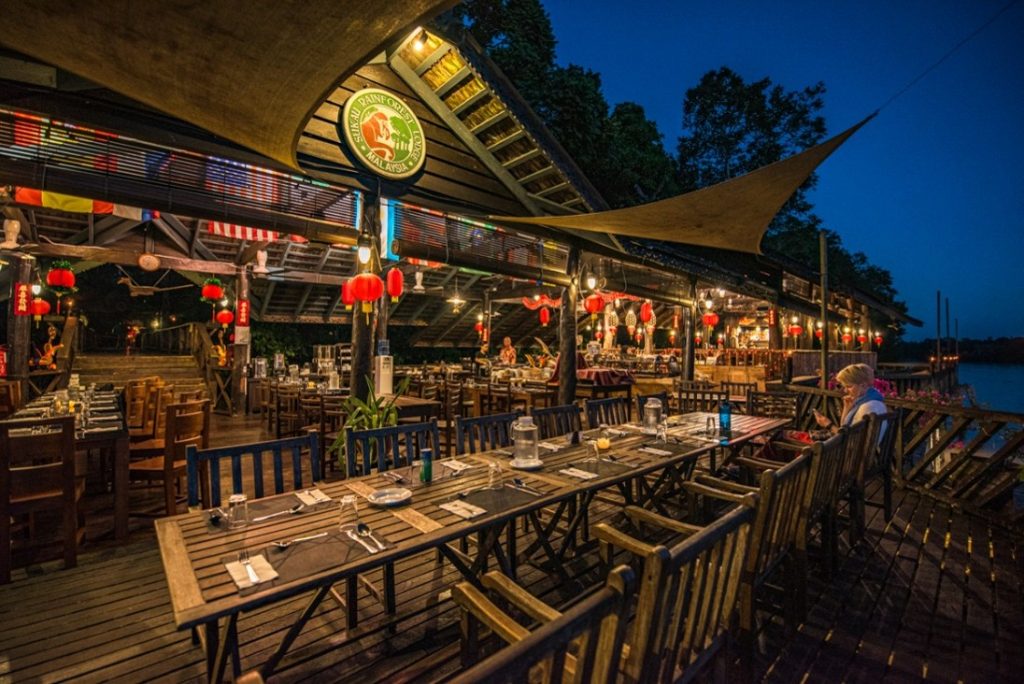
For travellers coming to Sabah in search of Borneo’s wildlife, the Kinabatangan River is often high on the list of places to experience, and for good reason.
Winding through the forests, wetlands, tributaries and oxbow lakes of eastern Sabah, the Kinabatangan sustains one of the richest wildlife habitats in Southeast Asia. Its riverbanks provide refuge for some of Borneo’s most remarkable species, including orangutans, proboscis monkeys, hornbills, crocodiles and the elusive Bornean elephant.
Set directly along this extraordinary river is Sukau Rainforest Lodge, a multi-award-winning, 4-star ecolodge that has welcomed guests into the heart of the Lower Kinabatangan since 1995. More than simply somewhere to stay, the lodge offers a comfortable and thoughtfully designed base from which travellers can experience the waterways, wildlife and rainforest that make this region so special.
From the moment you arrive, the river becomes part of your stay. It is the view that greets you over breakfast, the route that carries you into the forest each morning and the place where every bend offers the possibility of another encounter. Guided river safaris bring you closer to the Kinabatangan’s wildlife, while the lodge’s boardwalks allow the experience to continue beneath the canopy on foot.
Yet what makes Sukau Rainforest Lodge memorable is not only what you might see. It is how the place makes you feel: waking to the calls of the forest, sharing stories over dinner beside the river and realising that the wildlife you travelled so far to find is living just beyond your room. Here, the rainforest is not a distant attraction to visit; it surrounds every part of your journey.
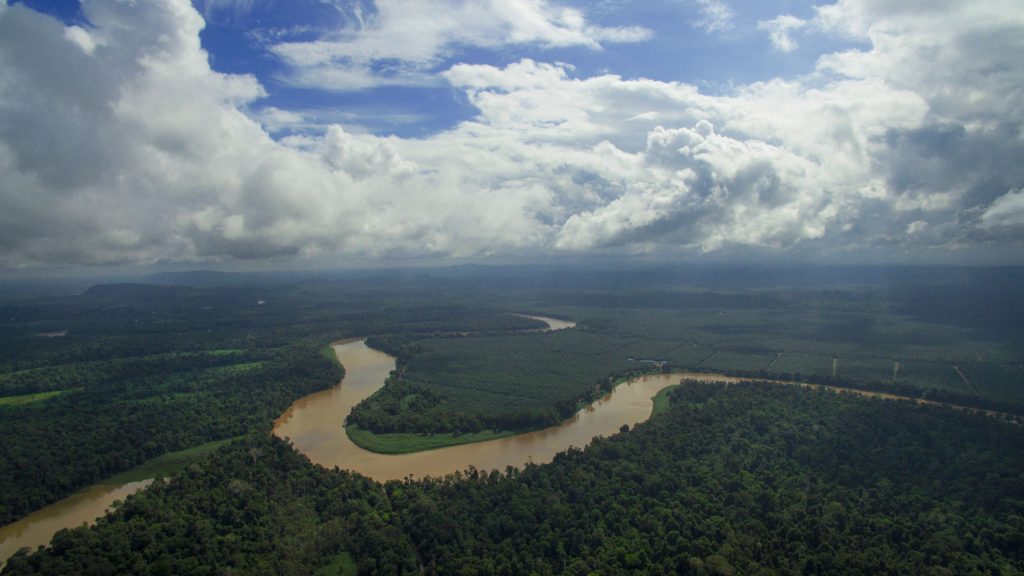
Sukau Rainforest Lodge (SRL) is located along the Kinabatangan River near Sukau in Sabah, Malaysian Borneo.
The lodge is reached from Sandakan by either boat or overland journey. The boat transfer takes approximately 2.5 hours, while the overland journey takes around two hours. Both routes offer a memorable introduction to Sabah’s countryside and rainforest landscapes.
The boat journey follows the Kinabatangan River, allowing guests to travel through the same waterways where they may later encounter proboscis monkeys, orang utan, crocodiles, pygmy elephants and a variety of birdlife. The overland route passes through Sabah’s rural landscapes before reaching the lodge near Sukau.
For travellers coming from the UK, the journey usually begins with a flight from London or another major UK airport to Kuala Lumpur, Singapore, or another regional hub, followed by a connecting flight to Sandakan Airport. There are no regular direct flights from the UK to Sandakan, so most visitors travel via one of these international gateways. From Sandakan, guests continue to Sukau by boat or overland transfer.
Once you arrive, the lodge’s riverside setting places you close to the Kinabatangan and its tributaries. Guests can head out on river excursions to explore the surrounding rainforest and look for wildlife, while remaining immersed in the sights and sounds of Borneo.
For many travellers, reaching Sukau Rainforest Lodge marks the beginning of a slower rhythm, one shaped by early mornings, river journeys, wildlife calls and peaceful evenings beside the Kinabatangan.
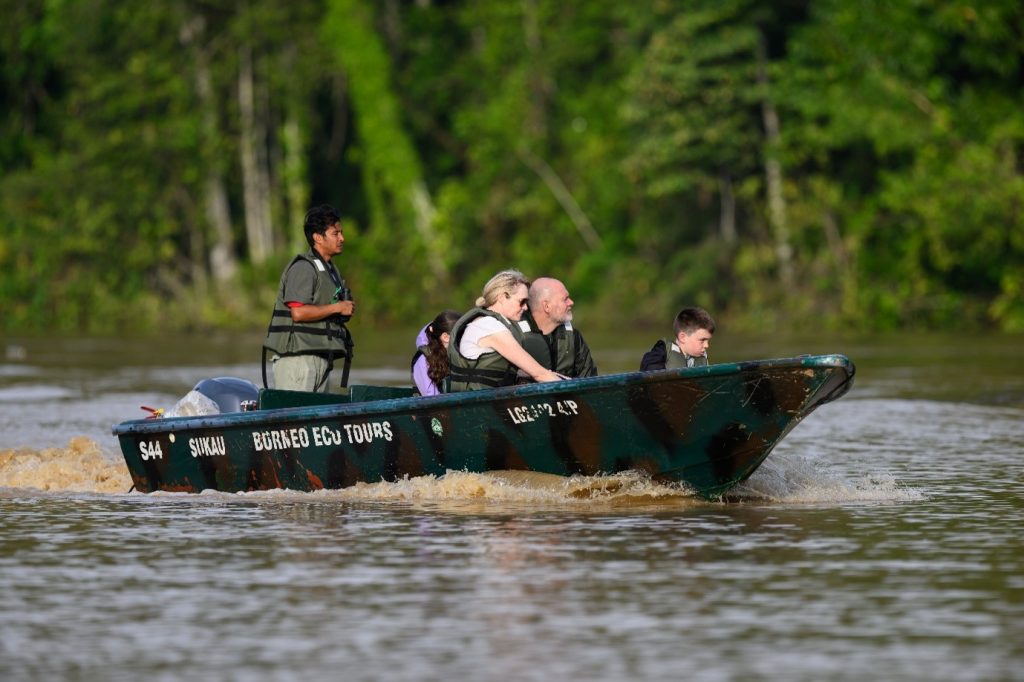
One of the defining experiences of staying at Sukau Rainforest Lodge is exploring the Kinabatangan by boat.
Morning and afternoon river cruises take guests along the main river and into its surrounding tributaries in search of wildlife. Each excursion offers a different experience because the river never feels quite the same twice.
In the early morning, mist may still hover above the water as the rainforest begins to stir. The temperature is cooler, the river feels calm, and the calls of birds carry across the canopy. By late afternoon, the light becomes warmer, shadows deepen along the riverbanks and wildlife begins to settle before nightfall.
The landscape also changes as you travel. Wide stretches of the Kinabatangan lead into narrower tributaries, where vegetation grows closer to the water and the forest seems to surround the boat. Elsewhere, quiet oxbow lakes create still, reflective habitats where guides pause to watch and listen.
Wildlife viewing here requires patience and careful observation. Your guide may notice the movement of leaves high in the canopy, the outline of a crocodile along a muddy bank or the distant call of a hornbill long before anyone else does. What appears to be an ordinary cluster of branches may suddenly reveal a proboscis monkey, a troop of macaques or an orang utan resting quietly above the river.
When wildlife is spotted, our boats use electric trolling motors to move more quietly through the water. The reduced engine noise helps minimise disturbance to the animals and allows guests to approach the moment more calmly and respectfully.
The boat slows. Conversations fade into whispers. Cameras are raised, but sometimes the most natural response is simply to watch.
There are no fences and no carefully arranged encounters. The animals move freely through their natural habitat, and every sighting happens on nature’s terms. Some cruises may bring several encounters in quick succession, while others reward patience with one quiet, unforgettable moment.
That uncertainty is part of the experience. Every bend in the river holds another possibility, and every journey reveals a different side of the Kinabatangan.
Then, just when the forest appears completely still, a branch moves; and everything changes.
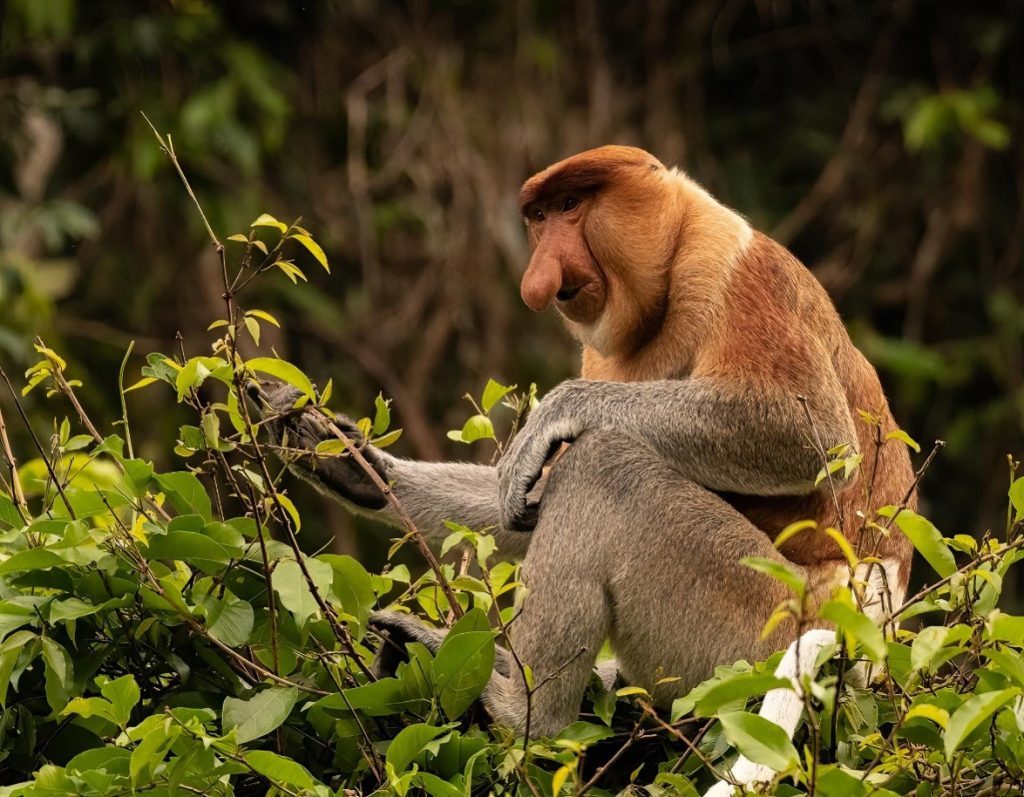
On the Kinabatangan, wildlife does not appear according to a timetable. There are no rehearsed moments and no guarantees about what may be waiting beyond the next bend.
Proboscis monkeys may gather in the trees along the riverbanks, their distinctive calls carrying across the water. Long-tailed macaques move noisily through the branches, while hornbills sweep overhead with the unmistakable sound of powerful wings beating through the air.
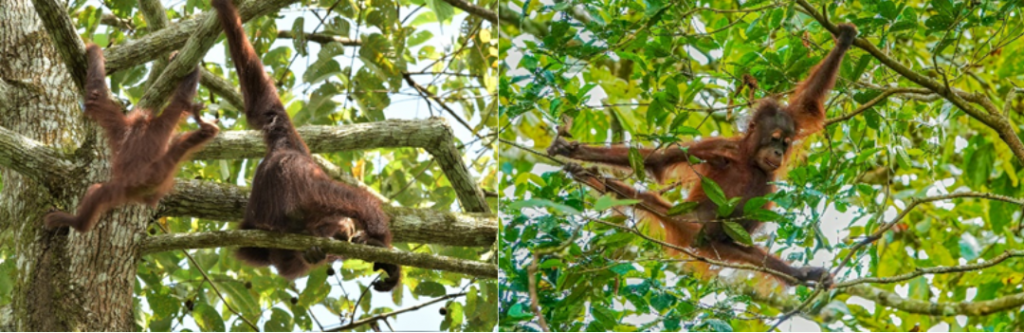
Elsewhere, a kingfisher may flash across the river in a sudden streak of colour. A crocodile might rest so perfectly still against the muddy bank that it disappears into the landscape. High in the canopy, a cluster of leaves may begin to move, and reveal an orang utan quietly feeding among the branches.
Sometimes the signs are subtle. A distant call. A shaking branch. A shadow where there was none a moment ago. This is where the experience and patience of your guide become invaluable. They understand where to look, what to listen for and when it is worth stopping the boat to wait.
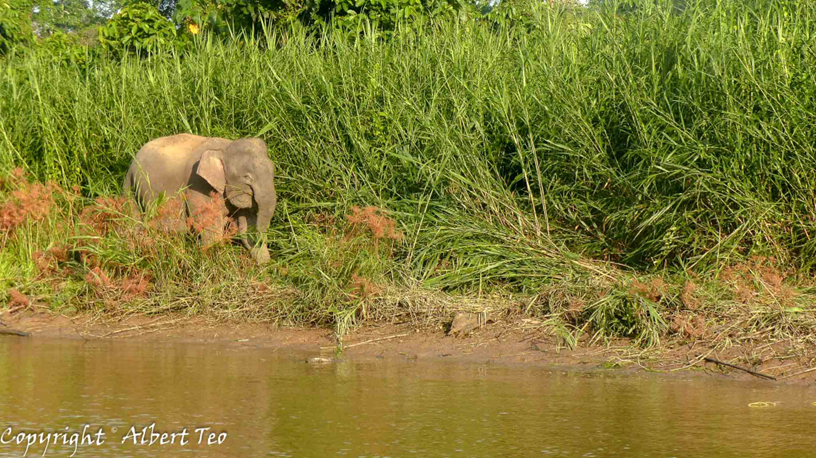
Then there are the Bornean pygmy elephants.
They roam freely across a vast landscape, following their own routes through the forest. Occasionally, when they move within accessible areas near the river, guests may be fortunate enough to encounter them. The first clue may be broken vegetation, a low rumble from within the trees or movement along the forest’s edge.
If they appear, the moment can be unforgettable. But if they do not, the river still offers countless other possibilities.
As with every responsible wildlife experience, sightings depend entirely on nature and can never be guaranteed. The animals here are wild, moving freely through their natural habitat. They do not appear because an itinerary says they should, and that is precisely what makes every encounter meaningful.
No two cruises are ever the same. A quiet journey can suddenly become extraordinary, while an animal seen clearly one morning may disappear completely by the afternoon.
The unpredictability keeps everyone watching. Every sound becomes a clue, every movement draws your attention and every bend in the river carries the promise that something remarkable may be just out of sight.
Here, nature decides what happens next. All you need to do is be present when it does.
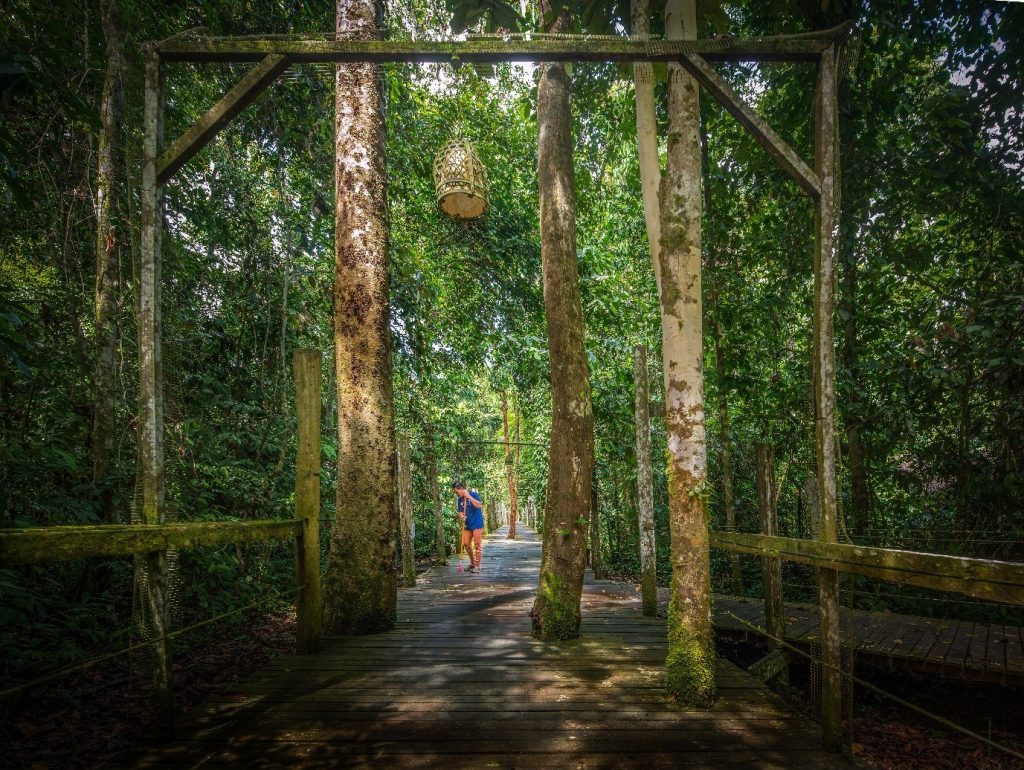
The Kinabatangan experience does not end when the boat returns to the lodge.
Sukau Rainforest Lodge was developed to retain as much of its surrounding natural environment as possible, allowing the rainforest to remain an essential part of the guest experience. Instead of clearing the vegetation to make way for the lodge, existing trees were deliberately preserved to provide natural shade and maintain an important canopy corridor for wildlife.
The Attenborough Boardwalk offers guests a way to explore this environment on foot. Winding beneath the forest canopy, it was carefully constructed to minimise its impact on the surrounding vegetation. Its posts were made using recycled timber collected from a local village settlement, while durable local hardwoods such as Belian; also known as Borneo ironwood have been used throughout parts of the lodge’s structure.
Rather than cutting through every obstacle in its path, the boardwalk was designed around the existing trees. This allows the canopy to remain connected above it, giving arboreal wildlife the freedom to continue moving through the forest.
As you walk, the experience is quieter and more intimate than a river safari. You begin noticing the smaller details: the movement of leaves overhead, the call of an unseen bird, the sound of insects and the occasional branch shaking somewhere beyond the walkway.
Orang utans, macaques, hornbills and other animals may sometimes be encountered around the lodge and boardwalk. You may return from a river cruise believing that the morning’s wildlife watching is over, only to discover our resident orang utan Lucky and Day resting in the canopy or an Oriental Pied Hornbill moving through the vegetation near your room.
Even the lodge’s facilities have been designed to maintain this connection with the rainforest. Melapi Restaurant offers meals beside the Kinabatangan, while the open-air Gecko Lounge provides a comfortable place to enjoy coffee, tea or an evening drink surrounded by the sounds of the forest.
Guests can cool off in the rainforest dip pools, spend a quiet afternoon with a book at Gomantong Hall or visit the Ape Gallery to learn more about Borneo’s wildlife and the ecosystems that support it. Kadai, the lodge’s souvenir shop, offers locally inspired products and keepsakes to remember the journey.
These spaces provide the comfort expected of a 4-star lodge, but the rainforest is never designed out of the experience. You can still hear it, see it and feel its presence around you.
That is what makes staying here so different. The lodge does not simply provide access to the Kinabatangan—it allows guests to remain immersed in its living environment throughout their stay.
Every unexpected encounter around the property is a reminder that Sukau Rainforest Lodge sits within a wildlife habitat.
The animals are not visiting us. We are visitors in their home.
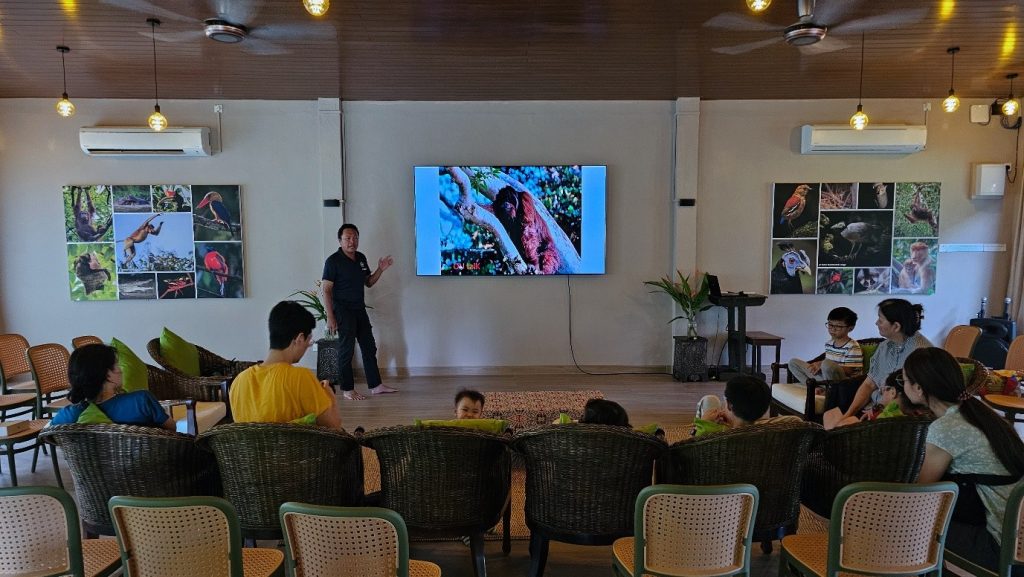
Since opening in 1995, Sukau Rainforest Lodge has developed around the belief that tourism and conservation should exist alongside one another.
Rather than separating guests from the environment they have travelled so far to experience, the lodge encourages visitors to understand the rainforest more deeply. Interpretation and educational experiences complement each wildlife excursion, while the lodge’s environmental and community initiatives form part of a broader commitment to responsible tourism.
At the Ape Gallery, guests can learn more about Borneo’s wildlife, ecosystems and conservation challenges. Naturalist guides bring this knowledge to life during river cruises and guided walks, helping guests understand not only what they are seeing, but why each species and habitat matters.
This responsibility is also reflected in how the lodge operates.
Rainwater is harvested, filtered and treated for use throughout the property, allowing the lodge to remain self-reliant on its water supply. Solar energy helps reduce dependence on diesel-powered generators, while solar-heating systems provide hot water in the rooms.
The open-concept design of Melapi Restaurant and Gecko Lounge allows natural light and air to move freely through the spaces, reducing the need for excessive lighting and cooling. Native vegetation has been retained around the lodge to provide shade, privacy and connected canopy routes for wildlife.
Efforts to reduce waste are equally important. Drinking water is provided in reusable glass bottles, refill stations encourage guests to carry their own bottles, and plastic straws have been replaced with locally sourced bamboo alternatives. Organic waste is composted, while other materials are separated and transported to Sandakan for responsible disposal and recycling.
Even the river experience has been considered. Electric trolling motors allow safari boats to move more quietly when approaching wildlife, reducing noise and disturbance while creating a calmer viewing experience for guests.
Sustainability here also extends beyond the natural environment. Many lodge employees come from surrounding communities, while local skills and craftsmanship can be seen throughout the property, from its boardwalks and wooden decks to its furniture and other handmade details. Through ongoing conservation and community initiatives, each stay also contributes to efforts that support the wider Kinabatangan landscape.
These practices may not always be the first things guests notice. Yet together, they shape the entire experience.
At Sukau Rainforest Lodge, ecotourism is not simply a message displayed for visitors. It can be seen in how the lodge was built, how it operates and how guests are invited to experience the rainforest; with curiosity, care and respect.
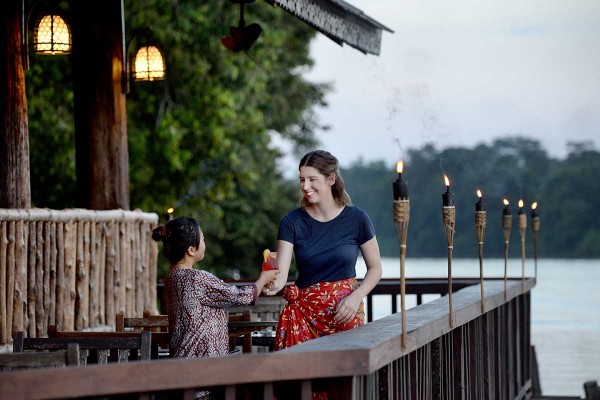
Sukau Rainforest Lodge has 40 rooms, comprising 20 Deluxe Rooms and 20 Borneo Villas, each offering a comfortable place to rest between wildlife adventures.
Here, comfort does not mean disconnecting from the natural environment. It means returning from an early-morning river cruise to a welcoming room, enjoying a warm shower and taking a quiet moment to process everything you have just seen; while the rainforest remains just beyond your window.
Between excursions, the hours unfold at an unhurried pace. You might cool off in one of the rainforest dip pools, find a peaceful corner with a book or simply sit and watch the Kinabatangan flow past.
At Melapi Restaurant, the river becomes the backdrop to every meal. Breakfast conversations often begin with the morning’s sightings, while dinner offers an opportunity to reflect on the day as the light fades over the water.
Later, Gecko Lounge and Gecko Bar provide relaxed spaces to enjoy a drink, exchange stories with fellow travellers and compare photographs. Someone may have spotted an orang utan. Another boat may have encountered elephants. Your own favourite moment might have been something much smaller a brilliantly coloured kingfisher or the sudden flight of a hornbill overhead.
The experience remains intentionally connected to its surroundings. Days may begin before sunrise and end with the calls of the rainforest, while everything in between is shaped by the rhythms of the river and the wildlife that depends upon it.
At Sukau Rainforest Lodge, luxury is found not only in comfort, but in proximity: the privilege of falling asleep within the rainforest and waking up ready to experience it all over again.
A stay at Sukau Rainforest Lodge can also become part of a wider journey through Sabah.
Borneo Eco Tours connects the Kinabatangan with destinations across the state, allowing travellers to experience remarkably different landscapes within a single itinerary. A journey might include the wildlife centres of Sepilok, the rainforests of eastern Sabah, the cultural and culinary experiences of Kota Kinabalu, the imposing presence of Mount Kinabalu or tropical islands surrounded by Borneo’s marine environments.
For travellers arriving from the UK or other long-haul destinations, this variety makes Sabah especially rewarding. Once you have travelled to Borneo, rainforests, rivers, mountains, islands, wildlife habitats and local communities can all become part of one extraordinary journey.
Yet for guests staying at Sukau Rainforest Lodge, the Kinabatangan often becomes one of the chapters they remember most.
Perhaps it is the stillness of the river before sunrise. Perhaps it is the first glimpse of a proboscis monkey among the trees, an orangutan high in the canopy or the distant movement of elephants at the forest’s edge.
Or perhaps it is something quieter: sitting beside the river after dinner, listening to the rainforest and realising how far away everyday life suddenly feels.
No two river cruises are ever quite the same, and the most memorable moments are often those that nature provides without warning.
That is the beauty of the Kinabatangan. You arrive hoping to see its wildlife, but you leave remembering how it felt to be part of its world.
Escape into the wild with a stay at Sukau Rainforest Lodge and make your next getaway one to remember. Discover more Borneo escapes with Borneo Eco Tours.
Read up on the areas you are visiting and on what wildlife you like to photograph before you go. Get a copy of our complementary E-book from our website on 'Kinabatangan Wildlife Sanctuary'.
They are many books on mammals and birds. Check out the website of Natural History Publications. The office is on Ground Floor, Wisma Merdeka, Kota Kinabalu.
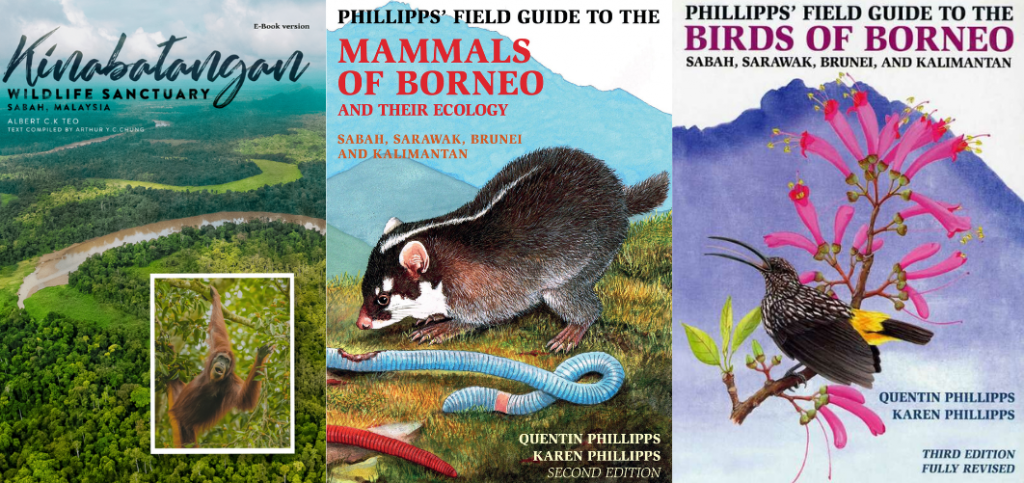
On birds and mammals of Sabah and Borneo, read up on the books Birds of Borneo and Mammals of Borneo by our Conservation Fellows, Karen and Quentin Phillips.
On land tours, turn off the car engines. This will also reduce noise and vibration. On long day tours, make sure you drink plenty of water to avoid dehydration. All our vehicles are equipped with filtered drinking water.
On river tours, avoid using two-stroke outboard engines. They are not only polluting and noisy to the passengers but also the wildlife.
Use electric motors on the boat if you have one in order to get closer to the unsuspecting wildlife and to reduce noise and vibration. (All BET boats in Sukau are equipped with one).
Most tourists go on dawn cruises when proboscis monkeys are just waking up from their sleep on treetops at the river’s edge. The noise from the river boats tend to drive many of them into the forest.
However, when most guests return to the lodge for breakfast, proboscis monkeys become more relaxed. Bring a short zoom like 24-70mm for wide angle subject and environment shots especially in morning mist.
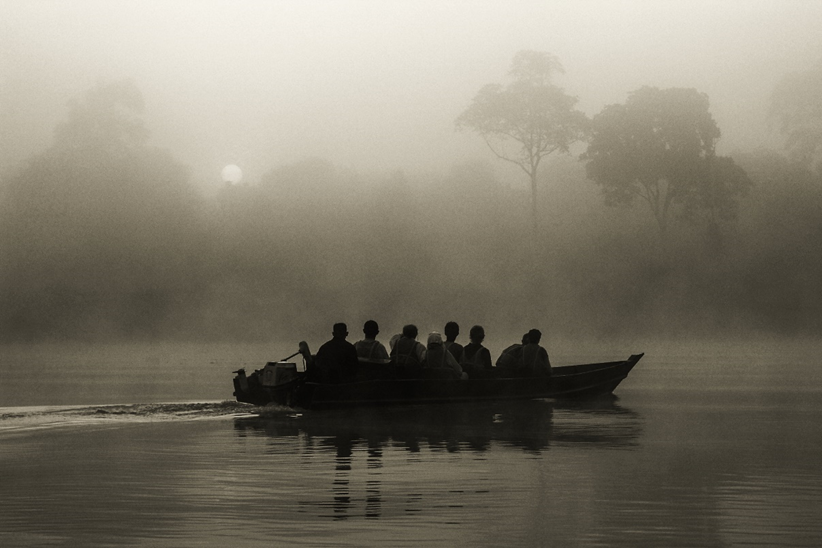
As the sun rises and as the mist dissipates, birds like hornbills, storm stork and animals like monitor lizards, crocodiles, langurs, macaques become more active and feed on the lower branches at the river’s edge. It is best to stay with one harem group and wait for action.
Without fail, they will move and leap from tree to tree or across the river. The best photos are often taken without other boats around when the birds and mammals are more relaxed. The light is also better after sunrise.
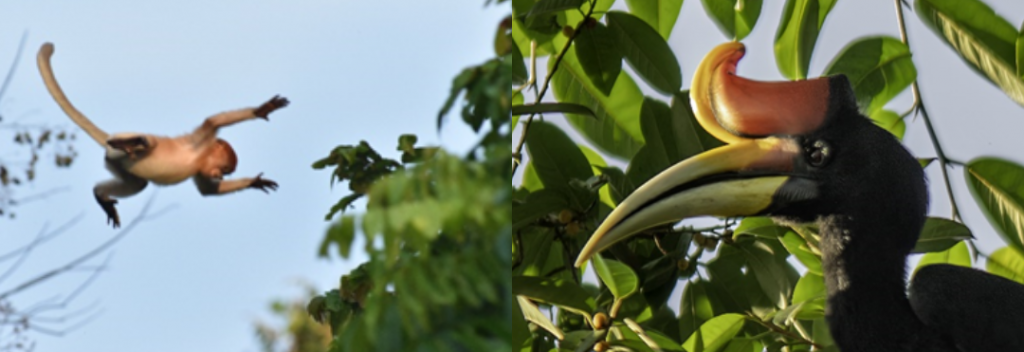
For wildlife photography, bring a 200-500mm zoom lens or equivalent and a teleconverter x1.4 and a camera with shutter speed of 10-30 frames per second.
Use telephoto lens to take photos of wildlife farther away from under the trees to reduce angle of view of subject instead of getting close to the wildlife and looking up animals on tall trees. It is against the law to ask the guide/boatman to get onto the land in the sanctuary.
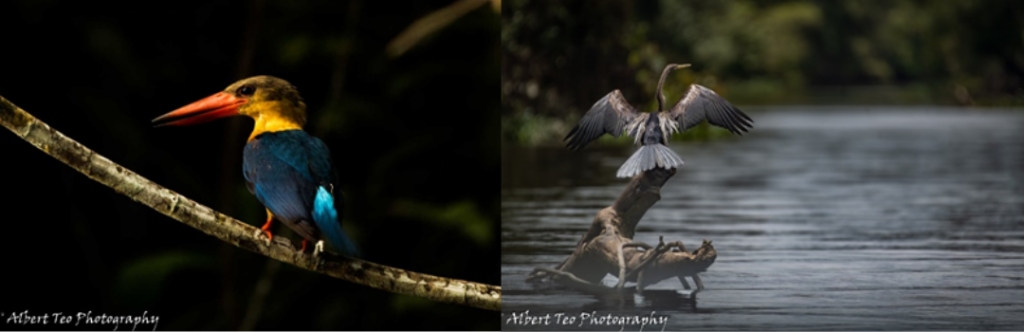
On moving boat, increase shutter speed or ISO to reduce blur. Increase your shutter speed to 1/2-3,000 per second for birds in flight. Many of my best photographs are taken during mid-morning and before late afternoon when there are fewer tourist boats around.
Proboscis monkeys and orangutan, like other animals are then more likely to show you their front side and not their back.
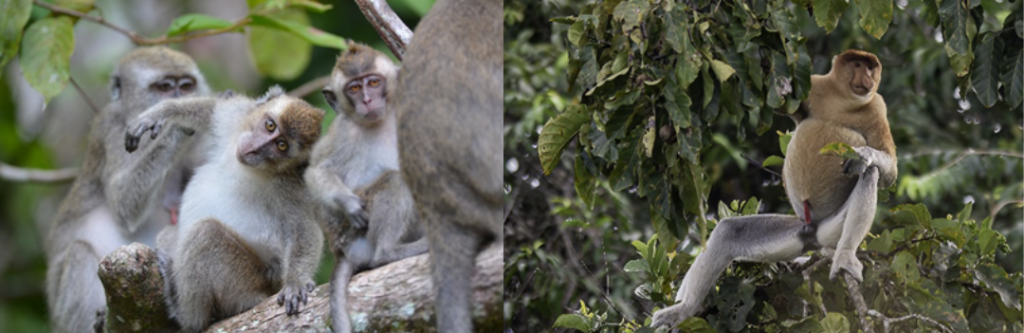
For serious photographers, it is best to stay out all day by arranging for private boat hire for the whole day. Bring a packed lunch and drinks with you. We also have an optional private “In search of elephant” tour.
Work with the weather, not just at dawn and dusk. Always bring raincoat with you. Don’t put away your camera or cut short your river cruise just because it looks like it is going to rain. The rain or storm is usually for about an hour or so.
Some of my best photos were taken immediately after the rain when birds are very active. Just take out your raincoat and wait through the storm. Use hat with string when in the boat to avoid hat being blown off by the wind. Wear sneakers and long pants to be safe in getting in and out of boats.
On the river cruise, you may not see a lot of flowers in the forest as compared with those at the lodge. So you are more likely to see many more sunbirds and insects around the lodge.
Keep an eye out for our 3 resident orangutans namely mother “Lucky” with her two male teenage orangutan “Day” and sibling “Hope”. Sounds of gong being struck six times mean orangutans have been sighted outside the room.
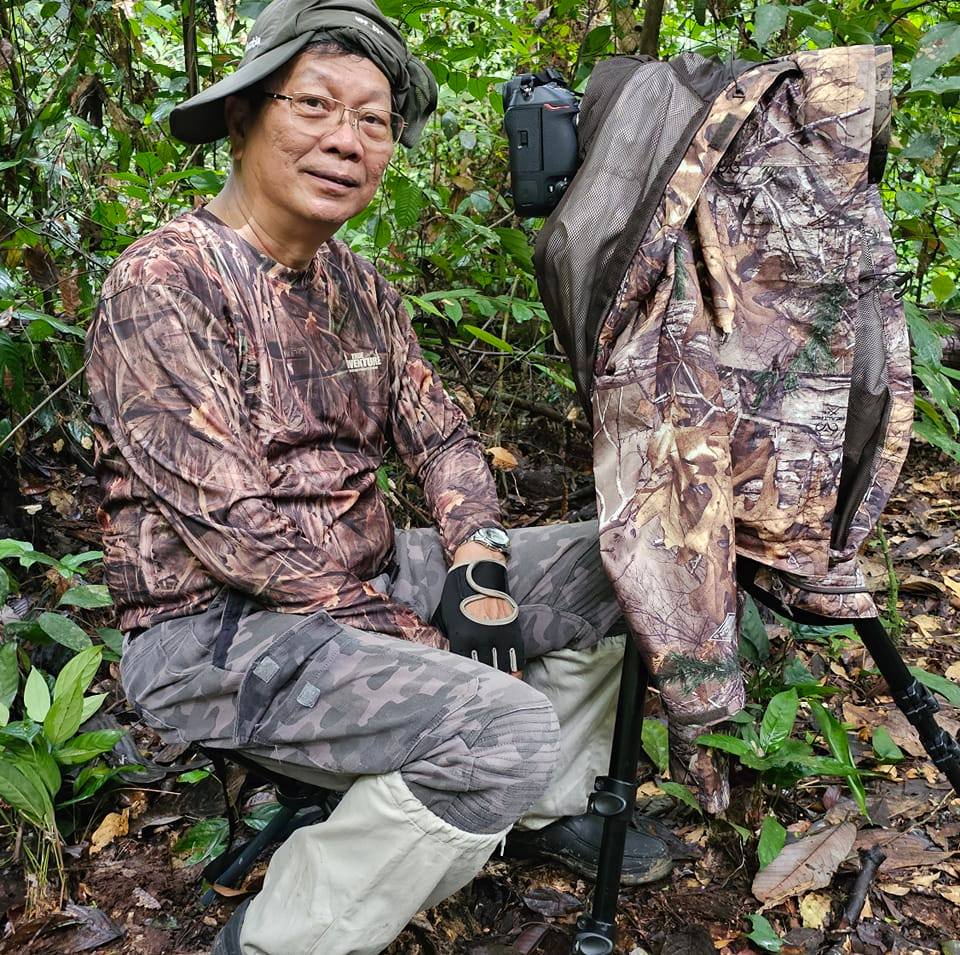
Written By Albert Teo
Managing Director of Borneo Eco Tours
Open
0800-1800hrs (Mondays-Fridays), 0800-1200hrs (Saturdays)
Close
Sundays & Public Holidays